Mercury Removal from Natural Gas for Modern Gas Recovery Systems
In the natural gas extraction process, mercury removal from natural gas is a crucial step. Even extremely low concentrations of mercury can corrode LNG heat exchangers and cause severe catalyst damage if not handled carefully. Furthermore, global environmental policies impose strict constraints on mercury emissions.
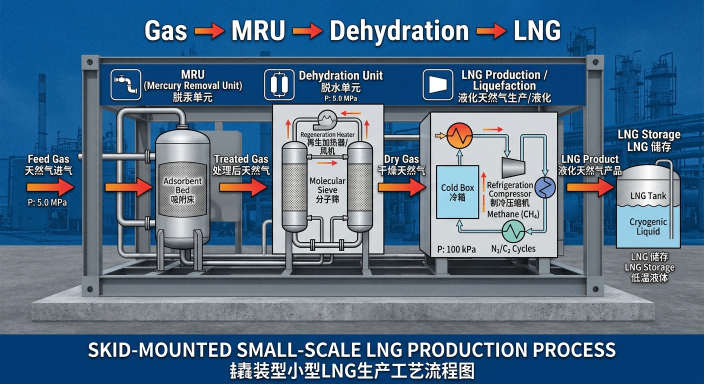
In LNG recovery systems, mercury levels typically need to be reduced to extremely low levels of <10 ng/Nm³, making mercury removal from natural gas a highly challenging engineering feat.
StrForms and Properties of Mercury in Natural Gas
Forms of Mercury
Only a comprehensive understanding of the physical and chemical properties of mercury can enable efficient mercury removal from natural gas.
Mercury in natural gas exists primarily in two forms: elemental mercury and a small amount of oxidized mercury. Elemental mercury is the most common and the most difficult to remove. Elemental mercury is highly volatile, and traditional cooling or separation methods are ineffective in removing it. Therefore, the entire natural gas recovery system needs to meet a PPB (per-unit of area) or lower standard to successfully remove mercury from natural gas.
Challenges of Mercury Removal from Natural Gas
Temperature, pressure, and the composition and water content of natural gas in different regions all affect mercury removal efficiency in India.
An LNG recovery system must integrate dehydration, deacidification, and compression and heat exchange systems to efficiently and smoothly remove mercury from natural gas.
Mainstream Technology Route for Mercury Removal from Natural Gas
Currently, adsorption is the primary method used in industry for mercury removal from natural gas, but different materials exhibit significant performance differences.
1. Sulfur-Impregnated Activated Carbon
This method utilizes the chemical reaction between sulfur and Hg⁰ to form solid HgS, achieving mercury removal. This technology is very mature and low-cost, making it the choice for most people. However, this technology also has some limitations, such as:
- Limited adsorption capacity;
- Sensitivity to moisture;
- High replacement frequency and high consumable costs.
2. Metal Sulfide Adsorbents
Utilizing copper sulfide and other complex metal sulfides, mercury removal is achieved through chemical reactions. This method offers good efficiency and stability. However, it has significant limitations: high cost, making it unaffordable for small-scale plants; and most materials are non-renewable resources, making it unsustainable.
3. Novel High-Performance Adsorbent Materials
Using selenium-based and halogen-modified materials, this method features chemical reactions with mercury to form relatively stable compounds such as HgSe, resulting in stronger overall adsorption capacity. However, current industrialization is limited, costs are high, and the technology requires further development.
4. Adsorbent Performance Comparison
| Adsorbent Type | Mercury Removal Efficiency | Service Life | Moisture Sensitivity | Relative Cost |
| Sulfur-Impregnated Activated Carbon | Medium | Short | High | Low |
| Metal Sulfide Adsorbents | High | Medium | Medium | Medium |
| Advanced Adsorbent Materials | Very High | Long | Low | High |
KAITIANGAS Integrated Solution for Mercury Removal from Natural Gas
KAITIANGAS offers a system-wide, integrated LNG recovery solution specifically designed for project environments with complex operating conditions, limited infrastructure, and high reliability requirements. The entire system includes a de-tribute process.
System-level Engineering Design
Unlike the relatively independent design approach of mercury removal units in traditional projects, KAITIANGAS integrates the design of natural gas mercury removal as part of the overall process system: the layout of the mercury removal unit (MRU) is optimized based on full-process simulation, the adsorbent is accurately matched according to the actual gas source composition and its fluctuation characteristics, and long-term operational stability and maintenance costs are fully considered in the design stage.
Source Control
A key differentiating capability of the KAITIANGAS solution lies in its ability to deploy mercury removal systems at the gas source. By introducing modular mercury removal units at the wellhead or front-end processing stage, mercury removal is achieved before the natural gas enters the main processing system. This effectively protects critical equipment such as compressors and heat exchangers, significantly reduces the risk of system corrosion, extends the overall equipment lifespan, and substantially reduces costs associated with later maintenance and unplanned downtime.
Rapid Deployment Capability
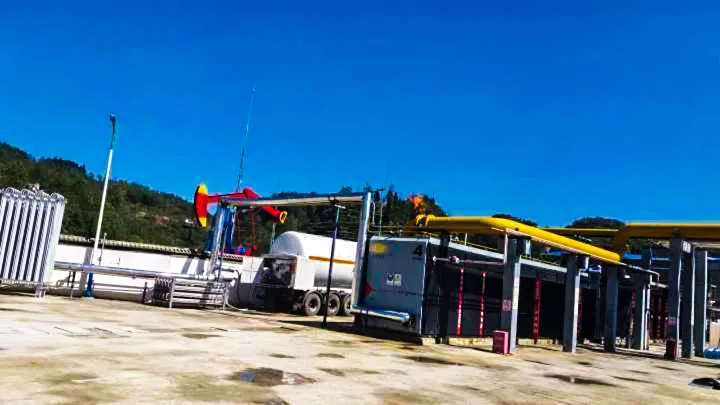
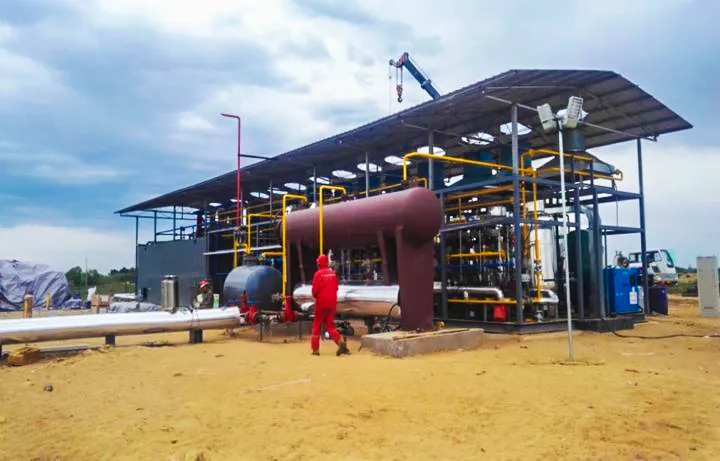
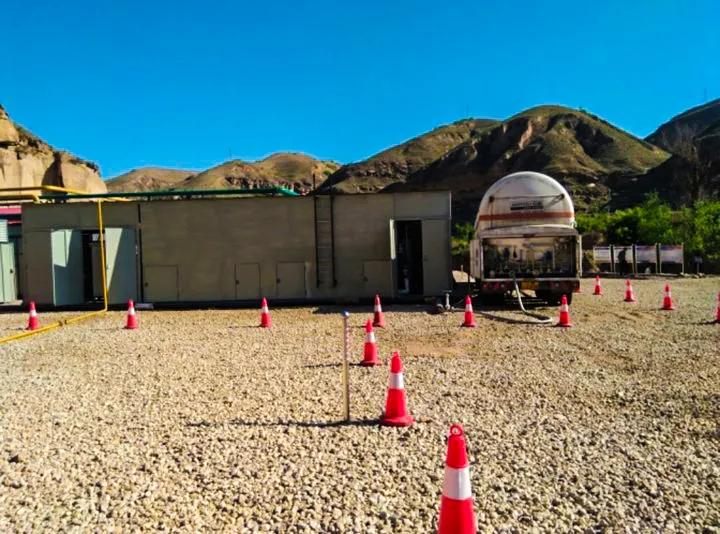
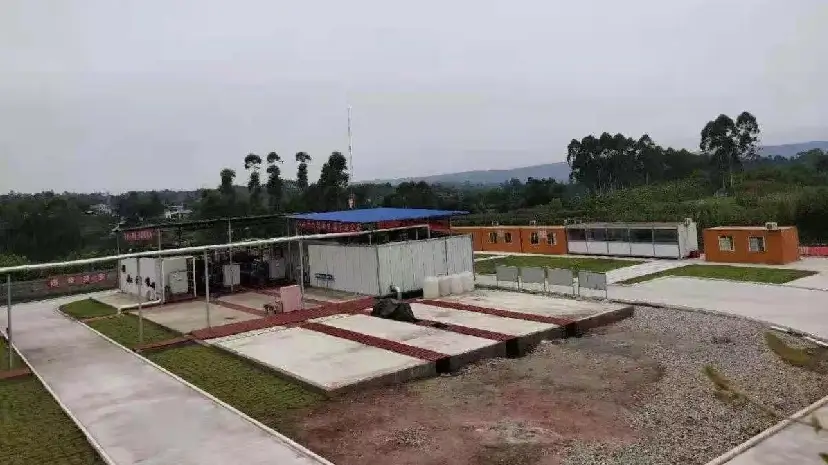
Addressing the challenges of deploying mercury removal from natural gas in remote areas and complex environments, KAITIANGAS employs a fully skid-mounted modular design. The entire system is prefabricated in the factory and can be quickly connected and installed on-site, achieving plug-and-play functionality. Furthermore, the skid-mounted units support flexible expansion and capacity adjustment based on actual gas volume changes, fully adapting to the processing needs of different development stages.
Multi-pollutant Synergistic Treatment Design
In actual operating conditions, mercury in natural gas often coexists with CO₂, H₂S, moisture, and heavy hydrocarbons. Traditional separate treatment methods easily lead to process interference, adsorbent degradation, and decreased system efficiency.
KAITIANGAS employs an integrated synergistic design, unifying and optimizing the process sequence, temperature and pressure conditions, and material compatibility of mercury removal, dehydration, and acid removal units. This ultimately achieves improved system efficiency, extended adsorbent lifespan, and reduced operating costs.
Targeting Small-Scale LNG and Marginal Gas Resource Development
Traditional mercury removal systems primarily serve large-scale centralized natural gas processing plants. However, an increasing number of resource types globally—marginal gas fields, associated gas, and decentralized gas sources—face practical constraints such as lack of pipeline transportation, small and fluctuating gas volumes, and sensitive investment recovery cycles.
KAITIANGAS focuses on small-scale and distributed natural gas processing scenarios, deeply integrating mercury removal units into overall gas resource commercialization solutions. This approach can directly convert low-value natural gas into LNG or usable energy products, enabling rapid deployment in areas lacking infrastructure, thereby effectively shortening project implementation timelines and accelerating return on investment.