
How to Choose the Right Flare Gas Recovery Company for Sour Gas Projects

Flare gas recovery systems have evolved from simple environmental protection measures into an important means for the oil and gas industry to improve resource utilization, reduce carbon emissions, and generate investment returns, in line with the continuous changes in global emission reduction policies.
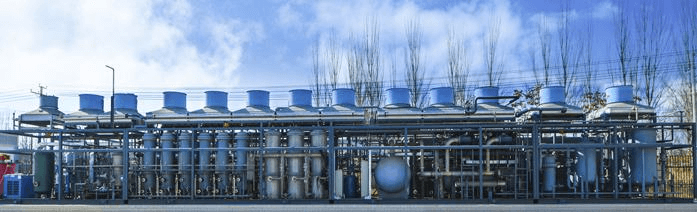
For typical associated gas projects, selecting a standardized flare gas recovery system is usually not difficult. However, for high-H₂S acid gas projects, supplier selection is far more important than equipment price. So, how should one select a truly reliable flare gas recovery supplier when faced with complex acid gas conditions?
5 Criteria for Judging Flare Gas Collection Suppliers
1. Verify the Supplier’s Proven Sour Gas Handling Capability
This is the most critical criterion for all acid gas handling projects. The industry typically classifies acid gases as:
- Light acid (<500 ppm H₂S)
- Medium acid (500–5000 ppm)
- High acid (>5000 ppm)
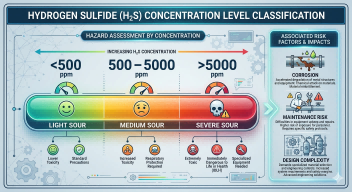
Most standard flare gas capture systems can handle light acid gases.
However, when H₂S concentrations reach high levels, differences in system design capabilities become rapidly apparent.
For example, suppliers like GARO Compressors often have an advantage when handling high H₂S refinery flares. Their Washing Amine Integrated System technology is a mature approach in high acid gas recovery, capable of simultaneously purifying acid gases during compression, significantly reducing the complexity of traditional post-treatment processes.
In contrast, if a supplier cannot clearly provide a verified H₂S handling concentration range and only claims to “handle acid gases,” it usually indicates insufficient engineering experience.
2. Ensure the Technology Route Matches Your Operating Conditions
Different flare gas recovery systems have vastly different applicable ranges. Choosing the wrong compression route, even with a well-known brand, can lead to system failure.
| Technology Route | Key Advantages | Limitations | Recommended Applications |
| Liquid Ring Compression | Strong corrosion resistance | Lower energy efficiency | High-sour-gas refinery projects |
| Cryogenic Recovery | Enables high-value natural gas recovery | Complex operation and maintenance | Remote oilfields |
| Modular LNG Recovery | Allows direct gas monetization | High CAPEX | Areas without pipeline infrastructure |
| Reciprocating Compression | High compression efficiency | Sensitive to gas contamination | Stable and clean gas streams |
For example, for remote oilfield high-acidity flare gas capture projects, modular cryogenic recovery solutions like GTUIT are often more attractive. They excel at flexible deployment under complex wellhead conditions and simultaneously recover high-value natural gas fluids.
If the project is located in an area lacking gas transmission infrastructure, then modular LNG suppliers like KAITIANGAS are more worth considering. Their small-scale liquefaction solutions can directly convert flare gas into transportable LNG, significantly enhancing the gas’s commercialization potential.
For international EPC projects, if the client prioritizes long-term stability and standardized delivery, Flowserve often passes technical reviews more easily, as its mature API standard system enjoys high recognition in large-scale refining projects globally.
3. Must Provide Real-World Case Studies
This is the most easily overlooked point when selecting flare gas recovery companies.
Many supplier websites display numerous case study photos, but truly crucial data is often missing.
You must request the supplier to provide:
- The range of H₂S concentrations treated
- Continuous uptime
- System uptime
- Mean time between maintenance (MTBG)
- Customer industry background
For example, established industrial brands like Flowserve typically provide detailed, standardized operational data.
In high-acid gas sub-scenarios, GARO Compressors, with extensive WAIS project experience, are often better able to demonstrate the reliability of their systems in continuously highly corrosive environments.
If a supplier can only display “project site photos” but cannot provide continuous operational metrics, the risk is extremely high.
4. Evaluate Material Standards for Long-Term System Reliability
In concentrated acid flare gas systems, material grade is often more important than compressor brand. It is crucial to confirm compliance with NACE MR0175, API 681, and ASME pressure specifications. These standards are core corrosion resistance standards and directly affect the long-term operational capability of the equipment.
Flowserve has a clear advantage in this area, with its highly standardized and mature equipment making it ideal for large-scale refining projects.
For modular, flexible deployment projects, GTUIT achieves a good balance between material compatibility and rapid on-site integration.
5. Assess Long-Term ROI Beyond Initial Equipment Cost
A successful flare gas recovery project must achieve a verifiable ROI, focusing on analyzing initial CAPEX, annual maintenance costs, recovered gas value, downtime loss risk, and investment payback period.
For example, if the core objective of the project is to maximize the commercialization benefits of natural gas, deep recovery routes like GTUIT or KAITIANGAS are generally more attractive.
If the objective is to reduce refinery flare emissions and stabilize fuel gas recovery, then GARO Compressors’ high-acid gas-liquid loop route typically offers better long-term economics.
For state-owned enterprises or international EPC projects emphasizing lifecycle stability, Flowserve, while requiring higher initial investment, generally offers more predictable long-term maintenance models.
How to Identify Unprofessional Flare Gas Recovery Suppliers
Be especially wary of the following:
- Only discussing the number of cases, ignoring H₂S concentration
- Avoiding NACE/API certification
- Inability to provide continuous operation data
- Significantly exaggerated ROI promises
- Vague descriptions of maintenance cycles
Truly mature flare gas recovery companies never shy away from these issues.
Confirm These 5 Things Before Final Procurement
Before signing a contract, ensure the supplier can clearly answer:
- What is the maximum validated H₂S concentration?
- Does it comply with NACE/API standards?
- What is the longest continuous operation period?
- What is the average maintenance interval?
- How is the project investment payback period calculated?
If these answers cannot be clearly provided, it indicates significant uncertainty regarding their flare gas collection capabilities.
Conclusion
Choosing a flare gas recovery company for a sour gas project is not essentially about finding the lowest price, but rather about finding the technological approach best suited to the project’s conditions.
For high H₂S refinery flares, established liquid ring technology suppliers are often more reliable; for complex conditions at remote wellheads, modular cryogenic recovery solutions offer greater flexibility; and in large international projects, standardization capabilities and long-term service systems determine the system’s lifecycle value.
Only suppliers who truly understand the characteristics of sour gases can transform flare gas recovery from an environmental investment into a long-term, stable economic return.